
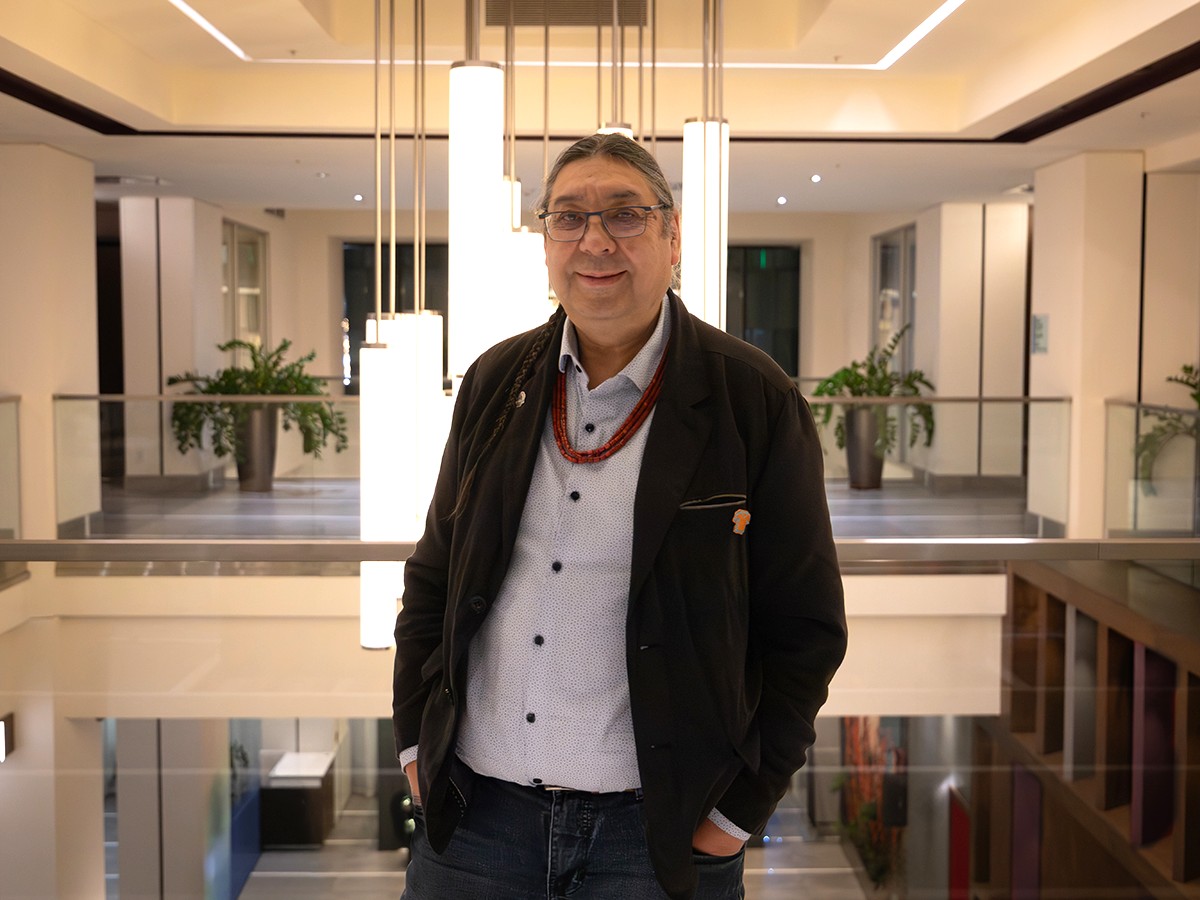
George Pachano – proud member of the Cree Nation of Chisasibi and residential school Survivor – has been the heart and steady hand behind the annual Fort George Residential School Gathering since its very beginning. What he once imagined as a “one-time thing just to get together with people we grew up with” has now grown into a meaningful annual event. “Here we are, ten years later, and we’re still at it,” George said with quiet pride.
The idea first sparked in 2015 when George and other Survivors convened in Montreal for the Truth and Reconciliation Commission. There, he connected with his former classmates, many who he hadn’t seen in decades. “As we were talking and reminiscing, we thought, ‘You know what, we should get together… despite all the bad that happened, there were good times too, so let’s relive those.’ That’s how it started.”
In the first couple of years, very few participants opened up and shared their stories. George remembers that support workers outnumbered the delegates at the earliest gatherings. “But it didn’t matter how many people showed up,” he said gently. “If two people showed up, that was fine. Healing is a process and not everyone starts at the same time.”
The growth in attendees has been incredible to watch over the past decade. The most recent gathering welcomed nearly 200 people, with some travelling from distant communities in Ontario.
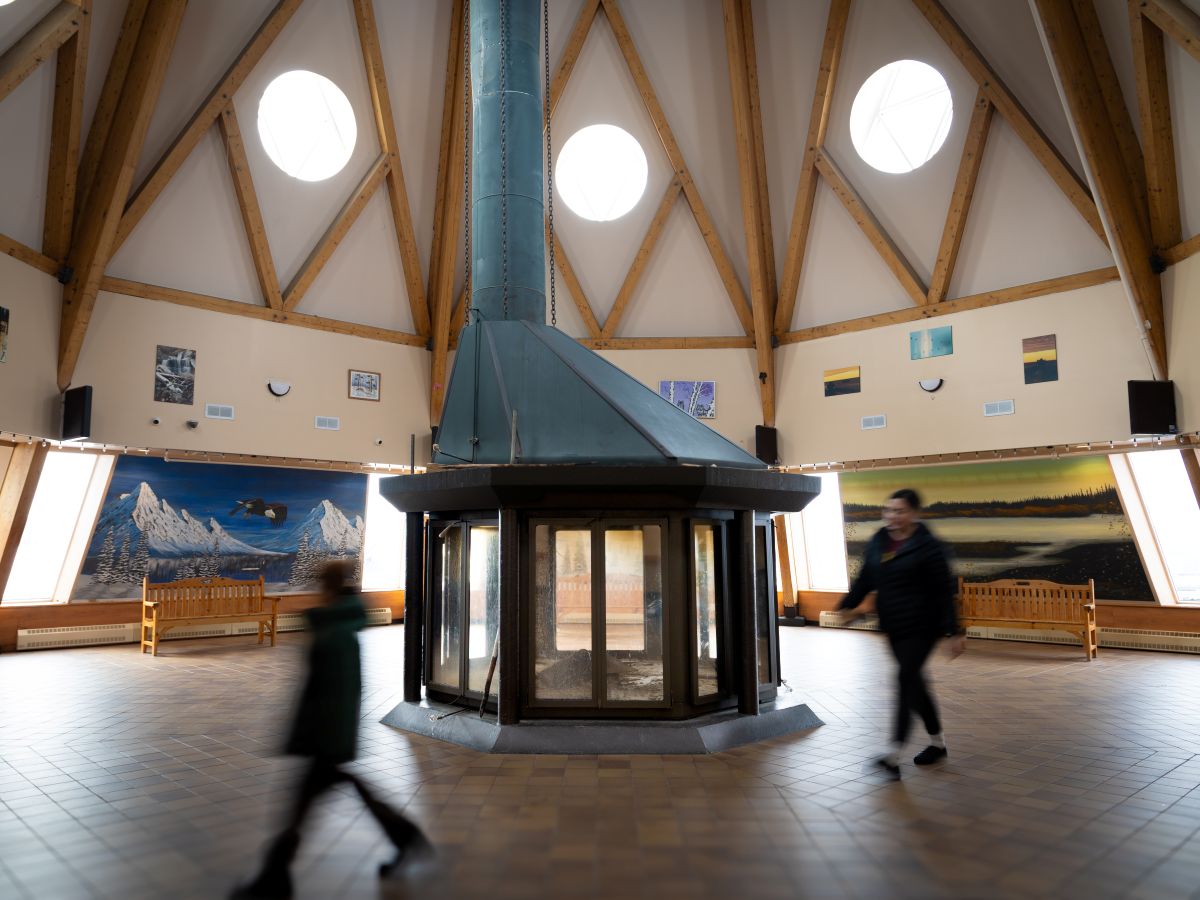
George credits Eeyouch who helped shape the gathering into the healing space it has become. Among them was the late, highly respected Larry House of Chisasibi, whose guidance helped weave together traditional healing practices and social work components. One of these is the Sacred Fire, a presence that brings people together: “It’s good to see something that’s constant for four days,” George remarked. “People come to the fire to sit and talk. It’s warm, and it’s comforting.”
Among those who tend to the Sacred Fire is Ricky Visitor, a local traditional helper. As a Firekeeper, Ricky can be found stoking the flames and guiding younger Firekeepers throughout the four-day gathering.
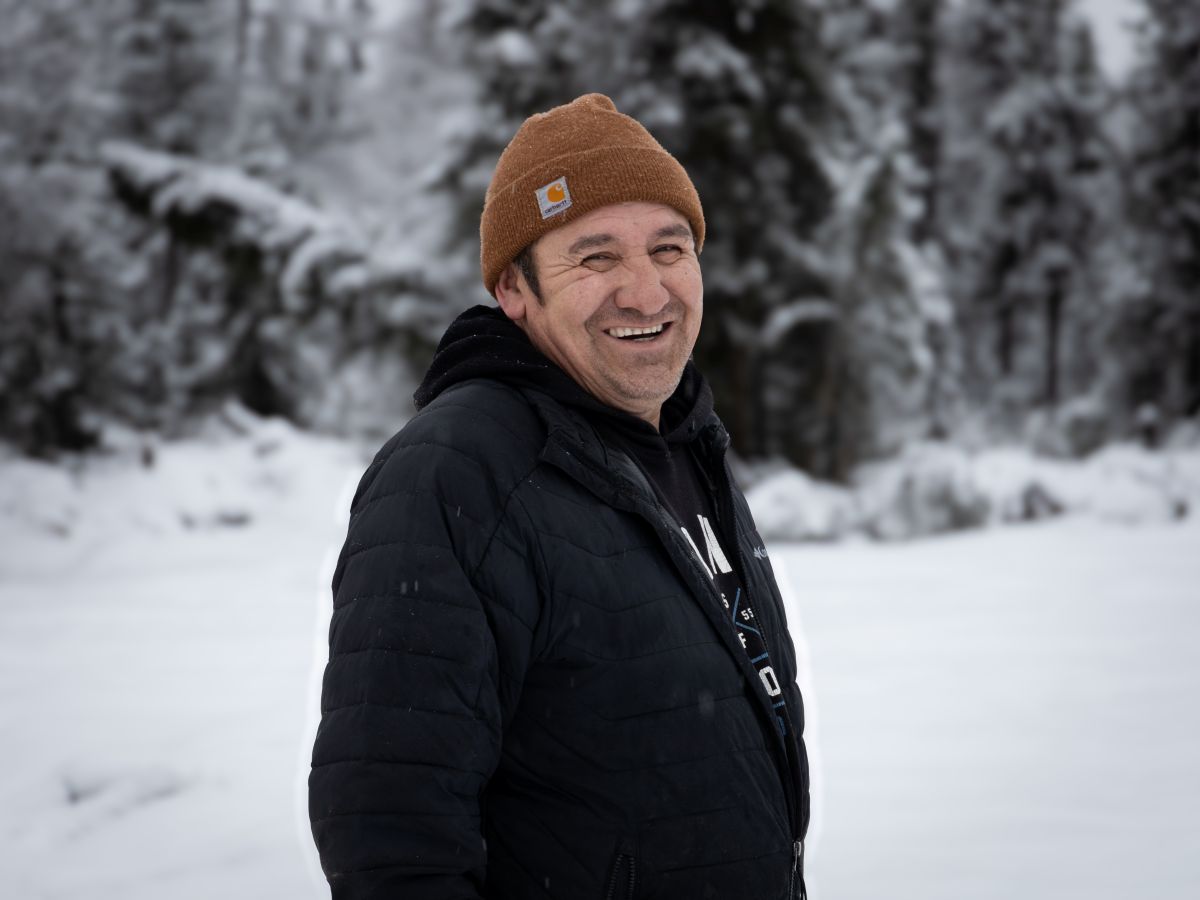
Ricky shared the powerful impact the Sacred Fire has on his personal well-being. “For me, following the traditional path is what helped me,” he reflected.
“When people come to the Sacred Fire to find healing, it keeps me going. It helps me with my healing, too.” – Ricky Visitor
Healing, of course, has no strict schedule. Although the gathering takes place during the day, some participants will visit the Sacred Fire throughout the night. “When they make offerings, they shed tears,” Ricky shared.
Reflecting on the significance and importance of fire, George honours it as a vital part of Iiyiyiuiyihtuwin (Eeyou/Eenou way of life): “The fire is what kept us fed, kept us alive, kept us warm. The women were in charge of the fire. They got the wood, they kept the fire going. Even people that do not follow the traditional ceremonies… they know the significance of the fire.”
Over the years, George has witnessed a positive shift. More people are stepping forward in their healing journeys and finding the strength to share their experiences. “The very first conferences we had were really, really hard,” George recalled. “And over the years, you see the difference. You see the difference in the attitudes and in the stories.”
Story and Photos by Karen Joyner-Blom